Skip to content

Proof

Four independent tests.
Four consistent results.

Oakland University, Spectrum Technologies, Panda Engineering and a 3,000+ mile road test. Each targeted a specific failure mode: vibration loosening, leak resistance, retention and real-world service resilience.

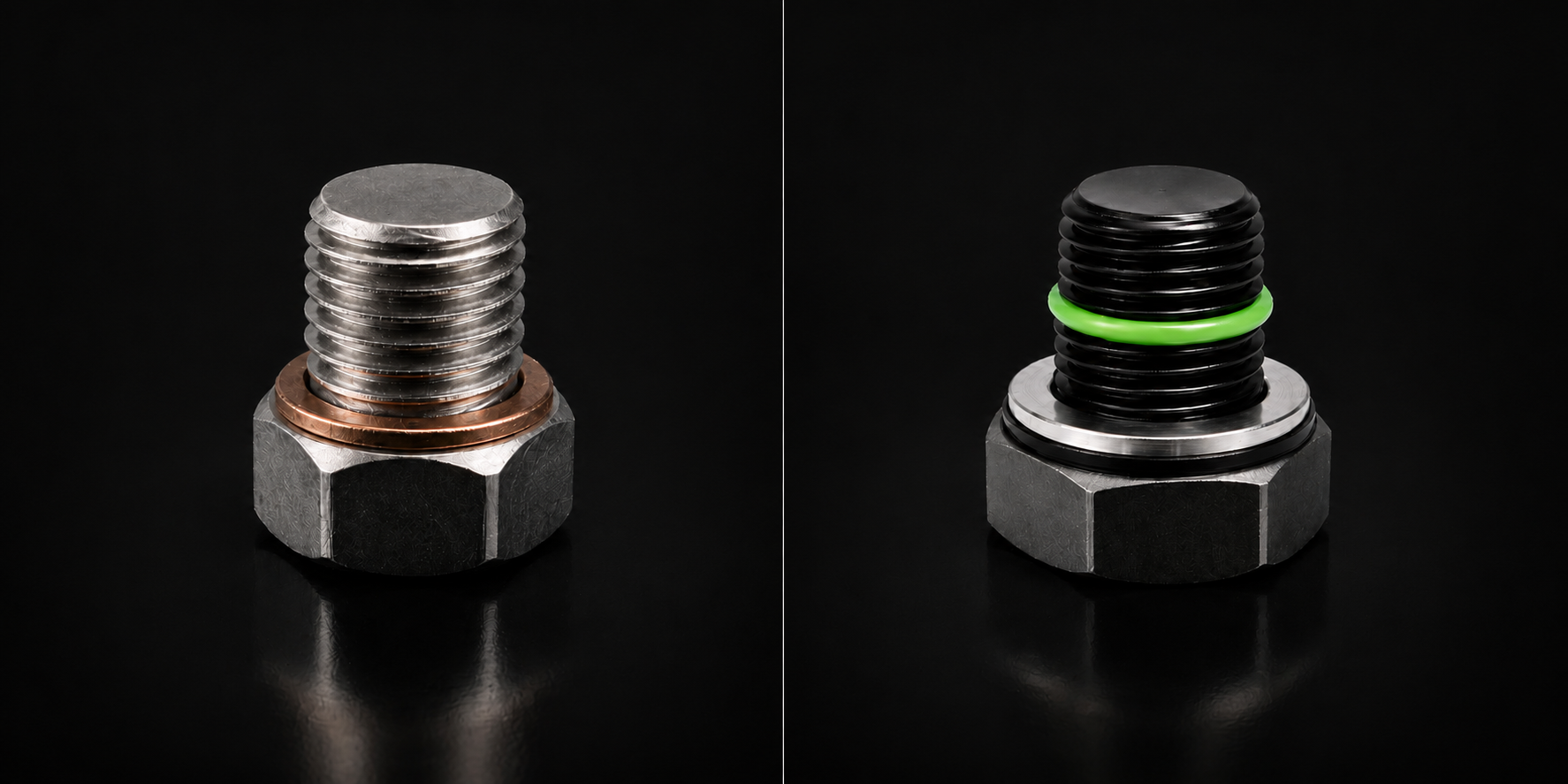
Worn conventional plug compared with a SMART-O® plug
USA patent6,752,174 B2. Protected sealing and locking mechanism.
ISO/TS certifiedManufactured to automotive quality standards.
Independent testsOakland University, Spectrum Technologies, Panda Engineering and 3,000+ mile road testing.

Independent testing

Four separate tests. Four consistent results.

Each test targeted a specific failure mode. SMART-O® was evaluated under conditions most conventional plugs would not survive.

Oakland University — Fastening & Joining Research Institute

9G vibration resistance

Test
High-vibration engine simulation at 9G vibrational force.
Method
SMART-O® was tested under vibration, including hand-tight installation conditions.
Result
Plug retained and did not drain oil during the tested condition.
Why it matters
Supports the anti-loosening claim under defined vibration conditions.
Spectrum Technologies — Michigan

Junkers transverse vibration

Test
Transverse vibration protocol used to stress fastener retention.
Method
The plug was subjected to lateral vibration to assess self-loosening behaviour.
Result
SMART-O® did not loosen completely and remained hand-tight after the test.
Why it matters
Shows the oil-activated O-ring can help interrupt the self-loosening pathway.
Panda Engineering — Michigan

Up to 17× loosening resistance

Test
Oil leak resistance testing in an actual vehicle oil pan.
Method
SMART-O® was compared with a conventional plug by measuring loosening resistance.
Result
Up to 17× more turns were required to loosen the SMART-O® plug.
Why it matters
Demonstrates O-ring grip once the seal is seated and exposed to oil.
Real-world driving — United States

3,000+ mile road test

Test
Adverse-condition driving programme across multiple vehicles.
Method
Plugs were installed under intentionally negligent, under-torqued conditions.
Result
No plug loss or significant leakage after 3,000+ miles in the tested programme.
Why it matters
Shows performance resilience when common service errors are simulated.

The O-ring science

Engineered by Parkerand DuPont.

The SMART-O® O-ring was developed using a patented material compound engineered in collaboration with Parker and DuPont. On contact with hydrocarbons — engine oil, synthetics, ATF, PAO — the material expands 10–20%, filling the thread gap and creating a seal from inside the drain point.

This material is compatible with synthetic oils, class 4 PAO, ATF, Hypoid, mineral oil, esters, diesters, polyol esters and most transmission fluids. It withstands temperatures up to 400°C. The green coating applied at manufacture is a first-insertion lubricant — its disappearance after use is normal and expected.

Patent and certification

Protected and certified to automotive standards.

SMART-O® holds USA Patent 6,752,174 B2, covering the patented sealing and locking mechanism at the core of the system. Reference the USPTO patent record in technical packs and distributor documents so buyers can verify the protected mechanism at source.

Components and materials are manufactured in facilities certified to ISO/TS automotive standards, ensuring conformance with quality requirements for parts used in professional vehicle servicing environments.

The Cr6-free black oxidised coating is a more responsible alternative to standard zinc-plated coatings. Conventional zinc plating often contains hexavalent chromium (Cr6) — a hazardous substance under multiple environmental and safety frameworks. The SMART-O® coating is free of Cr6 and is recyclable.

View technical resources Talk to SMART-O® about trade or distribution →

Responsible claims

Performance depends on correct installation.

These test results support SMART-O®'s anti-vibration and anti-loosening performance claims under specified conditions. They do not override the need for correct plug selection, undamaged oil pan threads, and washer replacement at every service. The system reduces service variables — it does not compensate for damaged components.

Read fitment guidance